
Summary
Condensation is reduced by moving moist air outside, keeping the room reasonably warm and removing standing water. A correctly positioned extractor with a suitable duct route is more dependable than relying on an open window. Plan extraction before the ceiling and wall finishes are completed.
Why bathroom condensation builds up
Warm shower air carries moisture. When it reaches a cold mirror, window or wall, the water settles on the surface. A busy bathroom can stay damp for hours if the air is not moved outside.
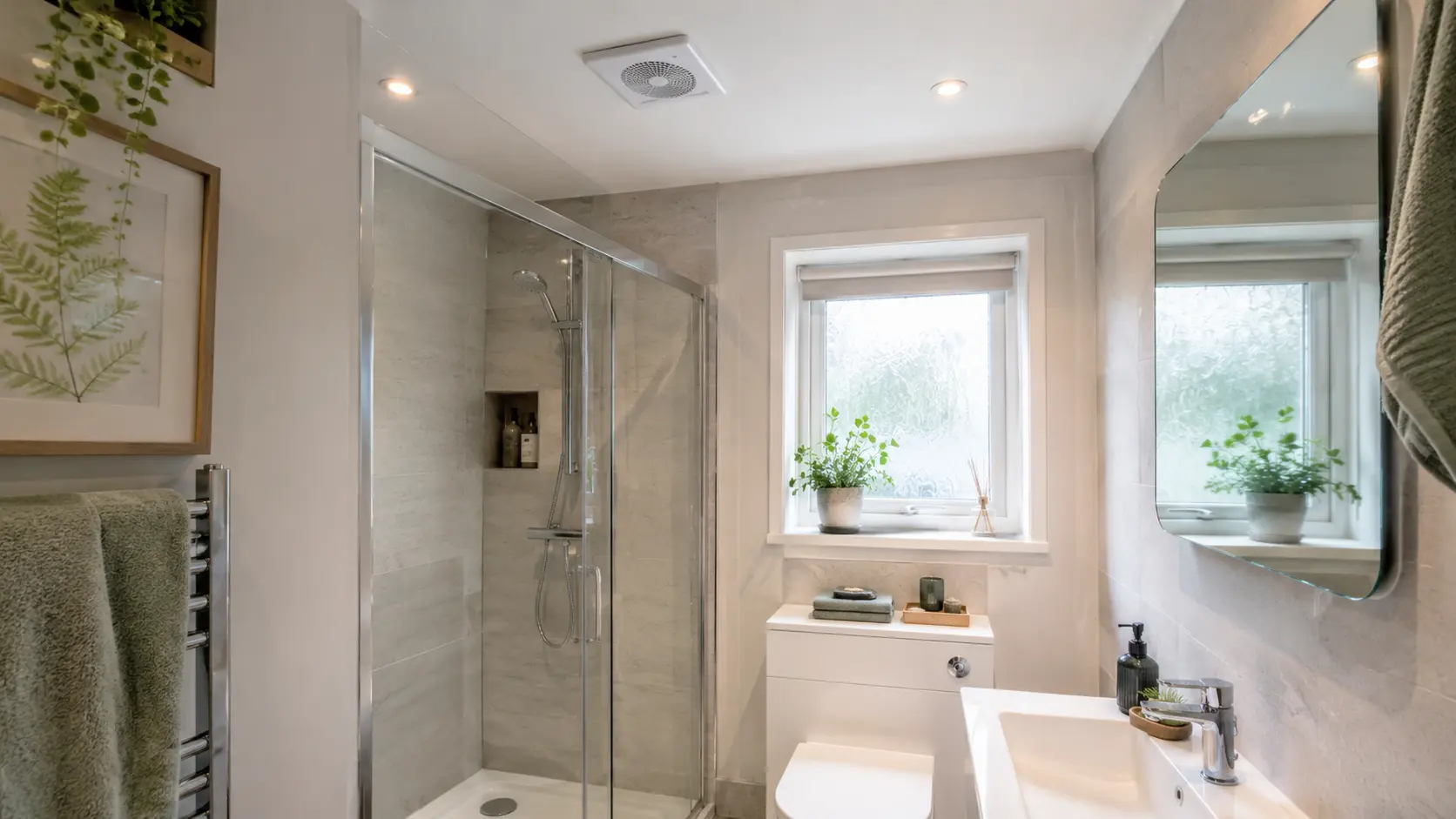
Opening a window can help, but a suitable extractor fan gives more dependable airflow throughout the year.
Plan extraction during the bathroom renovation
The fan position, duct route and outside vent all affect how well the system works. Long or restricted ducts can reduce airflow, so they should be checked before walls and ceilings are finished.
Electrical work in a bathroom must be carried out by a suitable qualified person.
- Fan position
- Duct route
- Run-on time or humidity control
- Outside vent
- Safe electrical installation
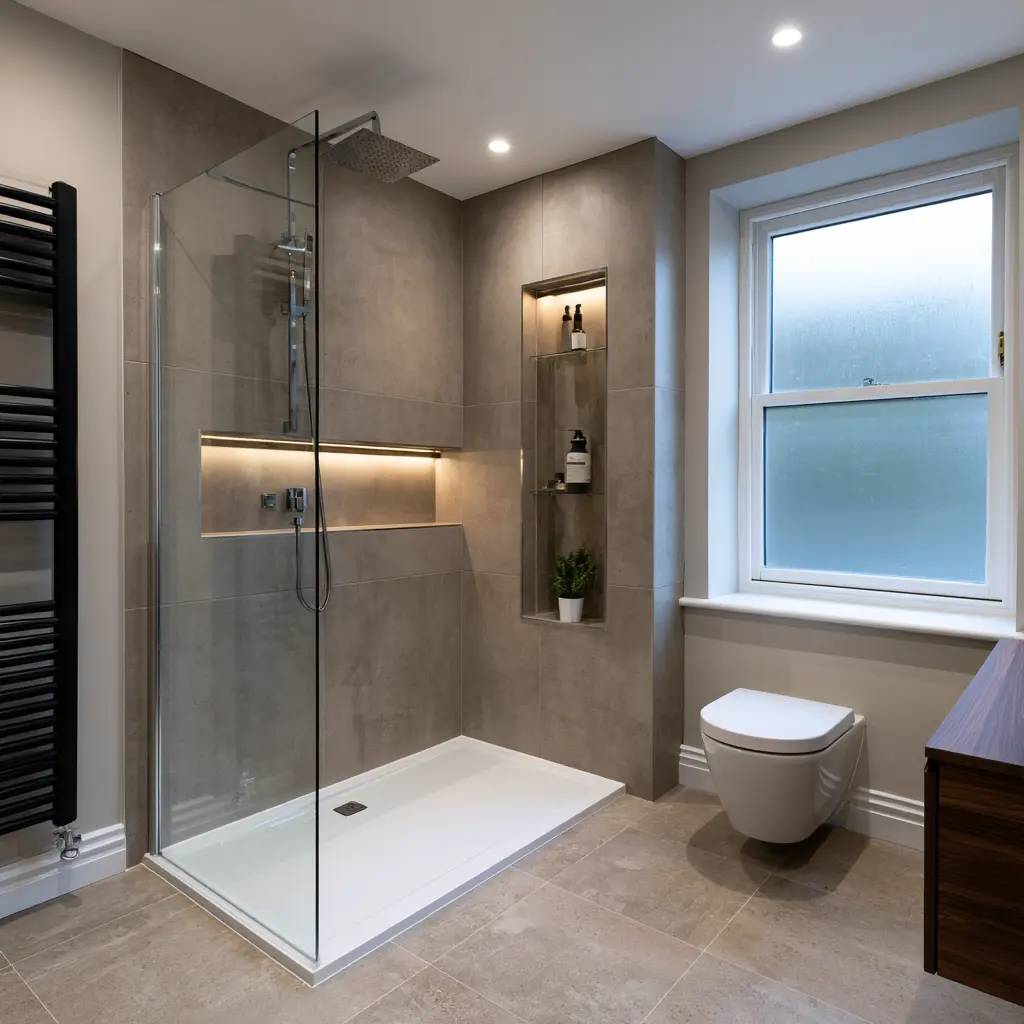
Simple ways to reduce moisture each day
Run the fan during and after showering, keep the room warm enough to avoid very cold surfaces and wipe away standing water. Leave the shower door open after use when it is safe to do so.
If mould keeps returning, look for the cause rather than covering it with paint.
Signs the bathroom needs a better moisture plan
Water running down walls, a mirror that stays wet for a long time, peeling paint, swollen furniture and recurring mould all suggest moisture is remaining in the room. A cold external wall may show the problem first, but the cause can involve extraction, heating, insulation, daily use or a combination of them.
Do not simply cover marks with fresh paint. Check that the fan operates, that the duct reaches outside and that the outside grille is clear. A noisy fan that moves little air may have a restricted or unsuitable duct. Persistent damp outside normal shower condensation can also indicate a leak that needs separate investigation.
- Check the fan and outside vent
- Look for recurring mould
- Keep surfaces warm
- Investigate possible leaks
Make good ventilation easy to use
A fan only helps when it runs for long enough. Run-on timers or humidity controls reduce the need to remember, provided they are selected and set correctly. The room also needs replacement air, usually through a door gap or another planned route, so the fan is not trying to pull air from a sealed space.
Combine extraction with steady heat and simple habits. Close the bathroom door while showering, wipe heavy standing water and leave the shower enclosure open afterwards when safe. These actions support the installed system; they should not be used to excuse poor extraction.
When condensation may be something more
Normal steam should reduce after showering when extraction and heat are working. Damp patches that remain in one place, discoloured ceilings below the bathroom, loose flooring or a musty smell inside furniture can suggest a leak or building issue rather than ordinary condensation. Do not assume a stronger fan will solve every moisture problem.
Record when and where the mark appears, then seek suitable advice. During renovation, damaged materials should be allowed to dry and the cause repaired before they are covered. The finished room needs a combined plan: sound plumbing, appropriate waterproofing, outside-vented extraction, adequate heat and surfaces that can be dried and cleaned easily.
- Separate steam from leaks
- Repair the cause before decorating
- Vent moist air outside
- Use heat and extraction together
Review performance in normal winter use
A bathroom may appear dry in warm weather but struggle when windows and external walls are colder. Review how quickly mirrors and walls clear during normal winter use. Make sure the outside vent is not blocked and that the fan continues running for the intended period. If moisture remains excessive, ask for the airflow, duct route, room heat and possible leaks to be checked together rather than replacing parts at random.